 Aavtaar
AI Agents in Healthcare: Post-Visit Follow-Ups That Actually Happen
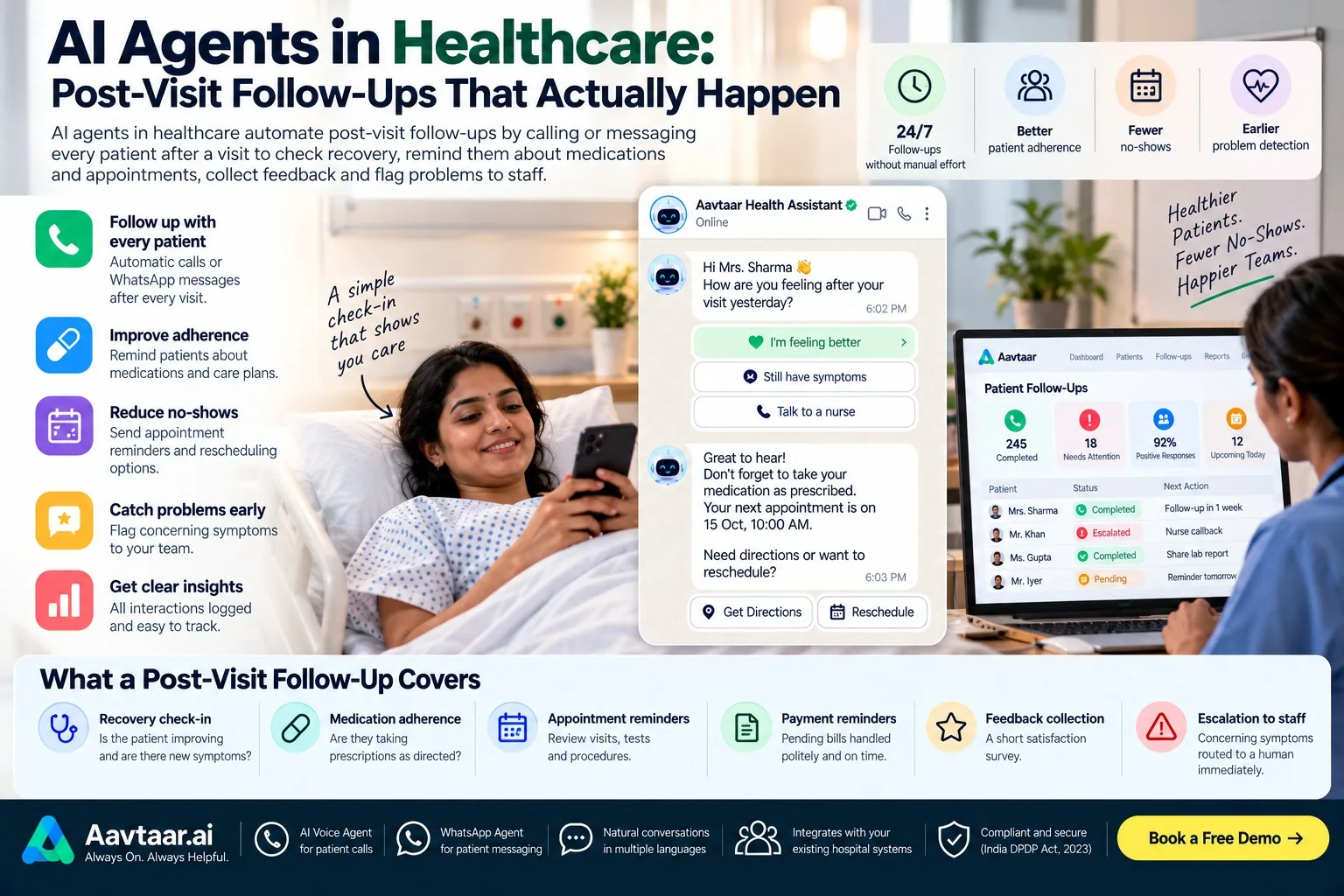
AI agents in healthcare automate post-visit follow-ups by calling or messaging every patient after a visit to check recovery, remind them about medication and appointments, collect feedback and flag problems to staff. Because the agent works around the clock and never forgets, follow-ups happen consistently instead of only when a busy team has spare time.
Every hospital and clinic knows follow-up matters. A patient leaves with a prescription, a care plan and a list of instructions. What happens next often depends on whether someone on the team has a spare moment to call.
Usually, nobody does. Front desks are busy, nurses are stretched, and follow-up calls slip to the bottom of the list. Patients who needed a nudge never get one, and problems surface weeks later instead of days.
Why Post-Visit Follow-Ups Fall Through
Follow-up rarely fails because of lack of intent. It fails because of capacity.
- Volume: A busy outpatient department generates far more discharges and visits than staff can call back.
- Competing priorities: Live patients always come before follow-up calls.
- Timing: Patients are reachable in the evening, but staff are not.
- Inconsistency: Who gets a call depends on who happens to be on shift.
- No record: Even when calls happen, outcomes are scribbled down or lost.
The result is a gap between the care a hospital delivers and the care patients actually complete at home.
What a Good Post-Visit Follow-Up Covers
A useful follow-up is more than "How are you feeling?" It typically includes:
- Recovery check-in: Is the patient improving, and are there any new symptoms?
- Medication adherence: Are they taking prescriptions as directed?
- Appointment reminders: Review visits, tests and procedures
- Payment reminders: Pending bills handled politely and on time
- Feedback collection: A short satisfaction survey while the experience is fresh
- Escalation: Anything concerning is routed to a human the same day
How AI Agents Make Follow-Ups Happen
An AI agent turns follow-up from a manual task into an automatic process. When a visit or discharge is recorded, the agent starts the conversation on its own.
Proactive Outreach at the Right Time
The agent reaches out when patients are most likely to respond, whether that is the next evening or a few days later, and retries if the first attempt goes unanswered.
Natural Conversations, Not Rigid Scripts
Instead of a robotic recorded message, the agent holds a real two-way conversation. A patient can say, "I'm still feeling dizzy," or ask, "When is my next appointment?" and get a relevant response.
The Right Channel for Each Patient
Some patients prefer a phone call, others a WhatsApp message. Aavtaar's AI Voice Agent handles outbound and inbound calls with natural conversation, and its WhatsApp Agent covers reminders and chat for patients who prefer messaging. Both share one record, so patients never repeat themselves.
Escalation When It Matters
This is the most important part. The agent should not diagnose or give clinical advice. When a patient reports worrying symptoms or sounds distressed, the conversation is flagged and transferred to a human with full context, so the care team hears about it the same day rather than in a monthly report.
Every Interaction Is Recorded
Transcripts, outcomes and flags sync to your CRM or hospital systems, giving teams a clear view of who was reached, who wasn't and who needs attention.
Aavtaar's AI agents for healthcare are designed for exactly these workflows, including appointment handling, patient follow-up and support. Healthcare teams such as Apollo Hospitals use Aavtaar to run check-in calls, payment reminders and satisfaction surveys that used to fall to whoever had a spare moment.
Benefits for Hospitals and Clinics
- Consistency: Every patient gets a follow-up, not just those someone had time to call.
- Earlier problem detection: Issues reach the care team within days.
- Better adherence: Reminders improve the odds patients complete treatment and attend review visits.
- Fewer no-shows: Automated appointment reminders reduce missed visits.
- Freed-up staff: Clinical and front-desk teams focus on patients in front of them.
- Better patient experience: Patients feel cared for after they leave.
Getting Started: A Practical Checklist
- Pick one workflow. Post-discharge check-ins or appointment reminders are common starting points.
- Define escalation rules. Decide exactly which answers trigger a human callback.
- Set boundaries. Make clear the agent supports your team and does not give medical advice.
- Connect your systems. Link scheduling, CRM and patient records so outcomes are logged.
- Review and refine. Use call and chat analytics to improve scripts and timing.
Privacy and Compliance
Patient data is sensitive, so confirm how any vendor handles encryption, access control, consent and data retention. In India, review obligations under the Digital Personal Data Protection Act, 2023, and confirm certifications relevant to your organisation directly with the vendor.
Frequently Asked Questions
What is a post-visit follow-up in healthcare?
It is contact with a patient after an appointment or discharge to check recovery, confirm medication and appointments, and gather feedback.
Can AI agents replace nurses or care coordinators?
No. They handle repetitive outreach so clinical teams can focus on care. Anything concerning is escalated to a human.
Can an AI agent give medical advice?
It should not. Its role is to collect information, answer administrative questions and escalate clinical concerns to your team.
Which channels work best for patient follow-up?
Voice calls suit patients who prefer to talk, while WhatsApp works well for reminders and quick replies. Offering both increases reach.
How quickly can a hospital go live?
Many teams can launch a first workflow within days once channels, knowledge and escalation rules are set.
The Bottom Line
Good care does not end at the discharge desk. The follow-ups that protect recovery and patient trust only matter if they actually happen. AI agents make them consistent, timely and visible to your team, while keeping humans in charge of anything clinical.
Want to see post-visit follow-ups running on autopilot?Book a free demo with Aavtaar and tell us which workflow to automate first.